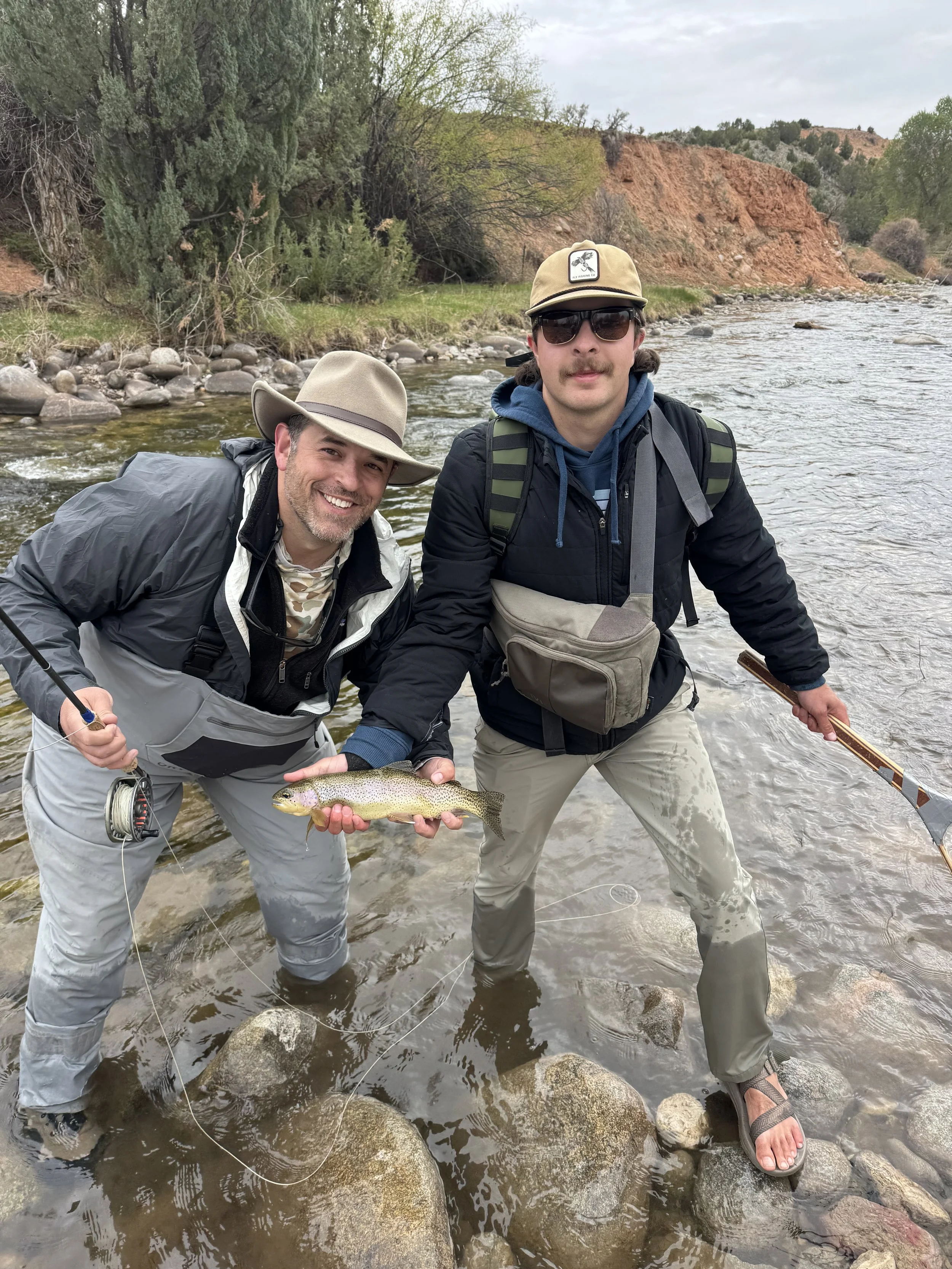
What if your next step isn’t about working harder—but taking more risk? A leadership reflection on burnout, growth, and clarity from a week in Wyoming.

This week was full, but not atypical for me.
Multiple large-group sessions. Coaching conversations. Facilitation. High output.
From the outside, it looked like a strong week. And it was.
But what stuck with me most wasn’t the delivery.
It was the coffee conversations.
The unexpected phone calls.
The long, unhurried dialogue with people I respect.
That’s where something deeper happened.
And it reminded me of a pattern I see over and over again with directors, VPs, and executives.
The higher you go, the easier it is for your calendar to become 100% execution.
Meeting after meeting.
Decision after decision.
Output after output.
You’re doing all day.
And competence matters. Results matter. Performance matters.
But there’s a quiet erosion that happens when everything becomes execution.
You slowly trade:
Relational depth
Perspective
Trust
Energy
Even your own growth
Not because you’re doing anything wrong.
But because execution crowds out reflection and connection.
And here’s the hard truth:
Execution produces output.
Connection builds legacy.
At senior levels, your leadership influence no longer scales primarily through what you produce.
It scales through who you develop.
Who you invest in.
Who trusts you.
Who experiences you as steady, intentional, and grounded.
If you’re not careful, your calendar becomes a scoreboard of activity — not alignment.
You’re moving fast.
But toward what?
The Subtle Drift
This drift doesn’t feel dramatic.
It feels responsible.
You’re needed.
You’re busy.
You’re important.
There’s pressure.
And so connection becomes optional. Reflection becomes indulgent. Alignment becomes assumed.
But leadership maturity isn’t about acquiring more skills.
It’s about reducing the gap between:
What you say matters
The decisions you make
The behaviors others observe
That gap widens quietly when execution dominates.
And the most dangerous part?
You can’t feel it immediately.
But your team can.
A Reset Worth Taking
Before next week fills up, ask yourself:
Who needs more than a meeting from me?
Not another agenda.
Not another status update.
Not another “quick sync.”
But a real conversation.
A check-in.
A development moment.
A 30-minute block with no outcome except connection.
You don’t need to overhaul your schedule.
But you may need to reclaim your intention.
If You Want to Go Deeper
One of the most effective ways to guard against leadership drift is to get clear on what anchors you.
Not your goals.
Not your KPIs.
Your values.
The principles that define who you intend to be — especially under pressure.
I created a short exercise called the Values Sort & Leadership Alignment Exercise to help leaders clarify their top three non-negotiable values and translate them into behavioral commitments.
It takes about 30 minutes.
No personality tests.
No corporate jargon.
Just clarity.
You can download it here:
Because the leaders who sustain influence over the long term aren’t the busiest.
They’re the most aligned.
Most organizations invest heavily in leadership development.
They build internal programs. They promote high performers. They send leaders to training. They care deeply about culture and results.
And yet—many leaders still feel stuck.
Not because they lack talent or effort, but because it’s incredibly hard to see yourself clearly when you’re inside the system you’re trying to lead.
That’s where an external coach or coach brings unique value.
Below are some of the most meaningful advantages organizations experience when they partner with an outside leadership coach or coach—and why those advantages are difficult (sometimes impossible) to replicate internally.
1. Freedom from Politics = Freedom to Tell the Truth
An external coach isn’t running for promotion. They’re not protecting turf. They’re not navigating internal alliances or historical baggage.
That distance matters.
Because when leaders talk to someone who has no political stake in the outcome, conversations change. People say the quieter things out loud. They test ideas. They admit uncertainty. They name tensions they’d normally soften or avoid.
This neutrality creates psychological safety—not the performative kind, but the real kind where honest reflection and challenge can coexist.
Inside organizations, even the most trusted internal leaders can’t fully escape perception or consequence. Outside coaches can.
2. Productive Ignorance Creates Better Questions
One of the most underrated advantages of an external partner is strategic ignorance.
Not knowing the acronyms. Not assuming how decisions “usually” get made. Not accepting long-standing explanations at face value.
This allows an outside coach to ask questions insiders often stop asking:
“Why does this decision require five approvals?”
“What actually happens when someone pushes back here?”
“What problem are we really trying to solve?”
These questions aren’t naive—they’re clarifying.
They surface assumptions, expose friction points, and often reveal that the system people feel trapped in is more flexible than they realized.
3. A Mirror the Organization Can Actually Trust
Strong coaching is less about advice and more about reflection.
External coachs act as mirrors—helping leaders see patterns in behavior, communication, and decision-making that are otherwise invisible when you’re in the middle of the work.
Because the mirror isn’t attached to performance reviews, compensation, or hierarchy, it’s easier to trust.
Leaders are more open to feedback when it’s:
Observational, not evaluative
Specific, not personal
Grounded in impact, not intention
This is why many respected leadership development firms emphasize assessment, reflection, and behavioral insight as foundational—not optional—elements of growth.
4. Exposure to Broader Perspective Without the Noise
External coaches bring pattern recognition.
They’ve seen what works—and what doesn’t—across industries, cultures, and leadership levels. They can spot familiar dynamics quickly:
The over-functioning leader who’s become the bottleneck
The senior team that avoids real conflict in the name of harmony
The high-performing culture quietly drifting toward burnout
This isn’t about copying another company’s playbook.
It’s about helping leaders recognize that their challenges are often common—and therefore solvable.
Organizations benefit when leaders can learn from outside perspectives without being overwhelmed by trends, jargon, or generic best practices.
5. A Challenger Who Can Push Without Penalty
One of the hardest roles to play internally is the challenger.
People feel the risks:
“Will this hurt my reputation?”
“Am I being seen as difficult?”
“Is this worth the political cost?”
External coachs can name what others are circling. They can slow leaders down when speed is masking avoidance. They can push for clarity when ambiguity feels safer.
Importantly, they do this in service of the leader and the organization—not their own agenda.
This kind of challenge accelerates growth because it’s paired with support, context, and real-time application.
An Insider’s Perspective: Acting "Outside" While Being Inside
Earlier in my career, I served on an internal organizational effectiveness team. It was some of the most fulfilling work I’ve ever done.
And here’s the interesting part: to be effective, we often had to operate as if we were outside the system.
We intentionally stepped out of day-to-day politics. We named patterns others tiptoed around. We disrupted habits—not to be disruptive, but to create growth.
That experience shaped how I think about leadership development.
Internal teams can do powerful work. But to do it well, they often have to borrow the very stance an external coach naturally brings: objectivity, permission to challenge, and distance from consequence.
Hiring an external coach simply formalizes that advantage.
Cost-Effective by Design (and Often Underestimated)
There’s also a practical consideration leaders don’t always say out loud: cost.
Building and sustaining an internal leadership development or org effectiveness function requires:
Salaries and benefits
Ongoing training and certification
Broad coverage across many competencies
Internal credibility-building that takes time
In many cases, engaging an external coach or coach is more cost-effective—especially when the need is targeted.
You don’t need to prop up an entire team when what you actually need is focused expertise at the right moment.
Training vs. Development (They’re Not the Same Thing)
It’s worth naming a distinction that gets blurred in many organizations.
Training is about skill transfer. Development is about behavior change.
Training answers: What should I do? Development explores: Why do I do what I do under pressure—and what needs to shift?
External coaches and coachs are typically brought in for development, not just training. The work lives in reflection, practice, feedback, and application—embedded in real leadership moments, not just workshops.
Specialists Where It Matters Most
Internal leaders and HR partners are often required to be generalists.
They support performance, engagement, culture, systems, and talent—across a wide range of needs.
External coaches, on the other hand, can be specialists.
For example, if an organization needs to elevate communication—
Public speaking
Strategic messaging
Executive presence
Asking powerful questions
Active listening in high-stakes conversations
—that’s where I do my best work.
This is what I’ve been trained to coach and facilitate—from frontline leaders to senior executives, boardrooms, and investor-facing conversations.
Organizations don’t need more content. They need sharper capability in the moments that matter most.
The Coaching Stance: Avoiding the Advice Trap
One subtle but important distinction in leadership development is how support shows up.
Many well-intentioned internal coaches get pulled into what’s often called the advice trap—solving, suggesting, or steering instead of helping leaders think.
That drift is understandable. Internal coaches are close to the business. They know the players, the pressures, and the history. Leaders often ask for answers.
But real coaching resists that pull.
Effective coaches help leaders strengthen their own agency—clarifying how they think, how they decide, and how they respond under pressure. The goal isn’t dependency; it’s capability.
External coaches are structurally better positioned to hold this stance. With less temptation to fix or advise, the work stays focused on reflection, experimentation, and ownership.
That distinction matters because sustainable leadership growth doesn’t come from better answers—it comes from better thinking.
6. Focus on the Human System, Not Just the Strategy
Most organizations don’t struggle because they lack strategy. They struggle because people struggle to execute together.
External coaches are trained to work in the human system:
How trust is built or eroded
How communication actually lands
How stress shapes behavior
How identity and role confusion show up under pressure
This complements internal expertise beautifully.
Strategy answers what to do. Leadership development addresses how people show up while doing it.
7. A Signal That Leadership Growth Actually Matters
Finally, bringing in an external coach sends a message—especially when leaders themselves are participating:
Growth isn’t remedial. Reflection isn’t weakness. Leadership is a practice.
When organizations invest in outside support, they normalize development as an ongoing process rather than a one-time intervention.
That signal alone can shift culture.
When Leaders Choose External Coaching (A Real-Time Example)
Just this week, I had two separate conversations—one with an HR business partner and another with a senior leader at a different organization.
What stood out wasn’t just that both wanted to leverage an external coach—it was why.
The HR business partner was clear: they needed a trusted external partner who could work with a senior team over time, engage honestly, and challenge where needed—while still aligning to the organization’s values and goals. Their internal team was strong, but proximity made certain conversations harder to hold.
The senior leader’s reason was different, but equally telling. They weren’t looking for general leadership support. They wanted specific communication coaching—executive presence, strategic messaging, and high-stakes conversations—capabilities they didn’t have in-house.
Both understood the same underlying truth: external coaches are most valuable when they bring either distance or depth that the organization can’t easily generate internally.
Investment in the Coach Is an Investment in the Client
Another often-overlooked advantage of working with an external coach is what sits behind the work.
Just last year alone, I invested over $20,000 in my own professional development—training, certifications, supervision, and continuous learning. Since going out on my own full time in 2022, that investment is closer to $100,000—all in service of helping clients move faster, go deeper, and create lasting impact.
That level of ongoing investment is difficult for most organizations to replicate internally.
Not because they don’t value development—but because internal coaching budgets are usually episodic. A certification here. A workshop there. Often a one-time investment rather than a sustained commitment.
External coaches, by contrast, are the product. Staying sharp isn’t optional—it’s the work. Our credibility depends on continued exposure to best practices, emerging research, and real-world application across contexts.
For organizations, this means access to:
Current, field-tested approaches
Coaches who are actively honing their craft
Capability built over years, not events
You’re not just hiring time—you’re leveraging accumulated investment.
A Final Thought
The strongest leadership development ecosystems aren’t built on either internal or external support alone.
They’re built by being intentional about when perspective, objectivity, and specialization matter most.
Internal teams bring continuity and context. External coaches bring clarity, challenge, and depth—without political drag or the advice trap.
The goal isn’t dependency on a coach. It’s leaders who think more clearly, act with greater agency, and lead more effectively long after the coaching ends.
That’s the work. That’s the standard I hold myself to.
This morning, I got one of those unexpected reminders about how challenging change really is — even when the change is good, logical, or necessary.
And it came from… a pair of shoes.
In the Daily house, my daughter Allie has been rocking the same pair of rainbow Crocs since summer. She wears them with socks. She wears them with confidence. She loves those things.
But it’s November in Ohio — cold mornings, wet grass, and playground gravel don’t mix well with shoes that have… holes in them.
So today, we made the switch to actual shoes.
You’d think this would be straightforward. Practical, even.
Nope.
It was a full-on emotional experience.
And honestly? It perfectly captured what the change curve actually feels like — for kids and adults navigating real-life transitions.
As I helped Allie put on her new sneakers, the reactions came fast:
“They’re itchy.”
“They hurt.”
“They feel weird.”
“I don’t like sneakers — they sound different.”
“They eat me.”
None of this was really about shoes.
This was about disruption.
Discomfort.
Losing something familiar and stepping into something unknown.
And I get it — deeply.
Over the past few years, I’ve lived through my own waves of personal change:
Leaving my full-time W2 job in 2022 to build Anchored Leadership full-time
Walking through a separation and divorce in 2023–2024
Learning how to balance my business with 50% solo parenting — meal planning, school mornings, managing a home, and holding the emotional load
Supporting my dad through significant health challenges for the past two years
Taking over stewardship of my family farm this year — a responsibility that’s equal parts joy, legacy, and weight
None of these changes were simple.
Some were healthy. Some were painful. All of them stretched me.
Because the nervous system doesn’t care about logic or strategy.
It cares about predictability.
And change disrupts that — even the positive kind.
Which is why change almost always feels like an itchy, noisy, too-tight shoe at first.
When a kid is melting down over shoes at 7:45 AM, your instinct is to power through. Fix it quickly. Keep moving.
But I reminded myself of something I teach leaders every week:
You can’t speed someone through the change curve. You can only support them while they move through it.
So instead of shutting down her emotions, I slowed the moment down.
I hugged her.
I helped her with the new shoes.
I didn’t shame her.
I didn’t tell her to toughen up.
I simply stayed with her while she felt what she felt.
After dropping her siblings off at school, I made a choice:
Instead of rushing her straight into daycare — still dysregulated and overwhelmed — I wanted to give her more time to recalibrate.
And honestly, I needed the connection, too.
It’s hard making decisions your kids don’t like.
It’s hard making decisions your team doesn’t like, too.
That’s part of leadership.
So we had hot cocoa and water at a local coffee shop.
Not as a bribe.
Not as a “reward for cooperating.”
But as space.
As presence.
As a warm landing spot between the disruption and the next thing.
By the time we arrived at daycare, she was grounded. Relaxed. Herself again.
The shoes weren’t magically more comfortable — but she was.
Because safety shortens the change curve in a way speed never will.
When teams experience change, leaders often focus on:
the strategy
the plan
the rollout
the benefits
the efficiency
the timeline
But people experience change through their emotions and nervous system, not through a project plan.
What feels like “an upgrade” to you might feel like itchy sneakers to someone else.
And when leaders bypass the emotional experience, people retreat:
They say yes but act no.
They comply but don’t commit.
They protect instead of participate.
They isolate instead of engage.
Not because they’re difficult — but because they’re human.
Here are a few reminders — for yourself and your team:
1. Expect discomfort, not resistance.
Most pushback is emotional, not strategic.
2. Don’t minimize the messy middle.
Acknowledge that the dip is part of the process.
3. Slow down enough to see people.
Presence regulates people faster than pressure does.
4. Normalize the uncertainty.
“It makes sense this feels unfamiliar” is a powerful sentence.
5. Celebrate willingness, not mastery.
Trying on the new shoes matters more than loving them on day one.
A Final Word for Anyone Navigating Change Right Now
Whether you’re leading yourself, your home, or your team through change — remember this:
Change is hard.
Even when it’s necessary.
Even when it’s right.
Even when you chose it.
Even when it’s “better.”
You don’t have to rush through it.
You don’t have to numb it.
You don’t have to pretend it fits before it actually does.
Give yourself time.
Give your people time.
Stay connected.
Stay human.
And remember:
Change doesn’t require perfection — just the courage to try on the new pair of shoes.
Go get ’em, friends.
It’s a quiet Friday evening in southern Ohio.
The air is still, the light is soft, and the edge of the field glows gold in the setting sun.
I’m sitting in a white lawn chair — a beer at my side, a bow across my lap. No tree stand. No camouflage. No scent blocker. Just me, the open field, and the hum of the evening around me.
Anyone who knows hunting would tell you: my chances aren’t great.
And they’d be right.
PREPARATION AND PERSPECTIVE
I haven’t done the recon work this season — no scouting, no checking trail cameras, no studying deer movement. Even though I grew up on this land — 200 acres of fields, ridges, and woods I know by heart — I don’t really know what’s happening out here right now.
But that realization didn’t frustrate me — because I knew my goal and intention weren’t to harvest a deer.
This evening was about carving out time and space for myself.
It was about quiet. About slowing down long enough to breathe. About finding some peace away from the everyday demands and routine schedules that can so easily leave me feeling busy and burdened.
Sure, I’m not the guy high in a tree stand with perfect wind direction, layered camo, and a logbook of sightings. But I’m also not sitting at home on the couch. I’m here — in the quiet, paying attention, open to whatever the evening brings.
And that alone increases my odds.
It’s not perfect, but it’s something.
And something beats nothing every time.
LEADERSHIP WORKS THE SAME WAY
We do this in leadership all the time.
We want breakthrough results — a stronger team, a healthier culture, better communication — but we show up like hunters in a white lawn chair, hoping results will just wander into view.
We haven’t done the preparation: the self-reflection, the development work, the investment in our people. We haven’t considered the environment, our tone, or how our presence affects others.
And yet, we expect to hit the target.
The truth is, intentional preparation matters. It increases our odds of success. But so does presence.
You can’t lead well if you’re not willing to show up — to be seen, to engage, to step into the field.
Even imperfectly.
THE POWER OF SHOWING UP
In leadership — as in hunting — you can’t control the outcomes. You can only control your inputs: your effort, your mindset, your preparation, and your presence.
Some days you’ll have the strategy dialed in.
Other days, all you’ll have is the courage to show up.
And sometimes, that’s enough. Because showing up changes you. It softens the noise, sharpens your attention, and reconnects you to what matters.
FINDING PEACE IN THE PROCESS
This past weekend, I came back out again — early mornings, both days. I woke before dawn, poured some coffee, and walked quietly into the woods while the world was still asleep.
I wasn’t chasing a deer. That wasn’t the point.
It was about time with myself.
Time with God.
Time with my thoughts.
It was about peace — the kind that only comes when you step out of the noise and into stillness.
And to be honest, I’ve needed that.
I’m over a year out from finalizing my divorce.
I’m raising three young kids.
I’m running a solo business and planning how to protect this family farm for the next generation.
There’s a lot of motion in my world right now — a lot of noise, decisions, and responsibility. But the stillness out here helps me remember who I am beneath all of that.
It’s humbling. It’s grounding. It’s healing.
And it reminds me that leadership — just like hunting — is deeply spiritual work. It’s not just about outcomes; it’s about alignment. It’s about showing up in a way that reconnects you to your purpose, your people, and your peace.
A CHALLENGE FOR YOU
So here’s the question:
What kind of leader do you want to be?
What kind of effort — or presence — does that require?
What’s one small, intentional step you could take this week to move closer to that version of yourself?
Maybe it’s preparing more.
Maybe it’s pausing more.
Maybe it’s both.
Because the deer might not show tonight or tomorrow — but your chances of seeing something meaningful go up every time you step into the field.
Here’s to showing up, slowing down, and leading with intention.
Happy hunting.
Every leader faces a choice: hold on to people out of fear, or grow them so they can climb from one peak to the next. Only one of those choices creates lasting impact.
I’ve worked for both types.
Leader One believed he had it all figured out. He was smart, driven, and even visionary—but he operated out of scarcity. Because he lacked self-awareness, he couldn’t see how his insecurities leaked into his leadership. Delegation was rare. Trust was thin. Growth conversations were almost nonexistent.
When I finally left the organization, he asked me if I knew what the hell I was doing—as if my aspirations could only exist inside his four walls. His leadership left me stifled and small.
Leader Two was different. Within weeks of joining his team, he asked me about my five- and ten-year plan. I told him my dream was to run my own business one day—something most bosses would interpret as disloyal. Instead, he said, “That’s fantastic. Let’s find ways to help you get there.”
He gave me projects that mimicked running a business, coached me with questions instead of just giving answers, and checked in not just about my work but about my family and my life. Five years later, many of the skills I use daily as an entrepreneur trace directly back to those opportunities.
Two leaders. Two choices. Two very different outcomes.
Simon Sinek reminds us: leaders eat last. True leadership is about serving others, not consuming their talent.
Adam Grant points out that great managers don’t hoard knowledge—they multiply it by empowering others.
General Stanley McChrystal writes about shared consciousness and empowered execution: the best teams thrive when leaders push authority and trust downward.
The Hudson Institute of Coaching and the International Coach Federation both emphasize that leaders who adopt a coaching posture—listening, asking questions, fostering growth—create sustainable performance, not just short-term results.
The Center for Creative Leadership has decades of research showing the differentiator of high-impact leaders is not technical brilliance but the ability to develop others.
The evidence is overwhelming: leaders who empower, multiply, and launch others win in the long run.
Here’s the tension every leader faces:
Scarcity Leadership:
Hoards talent.
Fears being replaced.
Defines people only by their role.
Believes loyalty means staying forever.
Abundance Leadership:
Develops talent.
Extends trust and responsibility.
Sees the whole person, not just the job.
Believes loyalty means helping people reach their own dreams—even if it takes them elsewhere.
Scarcity leadership creates compliance. Abundance leadership creates commitment.
If you’re doing your job as a leader, people will grow. And growth often means leaving.
That departure is not a failure—it’s your legacy. The mark of a great leader is not how many people stay forever, but how many leave better, stronger, and more prepared for the next peak.
The leaders we remember most are the ones who launched us, not the ones who trapped us.
Ask yourself:
Do I see my team as extensions of my own agenda, or as people with their own dreams?
When someone brings up future aspirations, do I get defensive—or do I get excited for them?
Am I creating opportunities that prepare them for the future, even if that future is outside my organization?
Will people look back and say I was the leader who gave them wings, or the one who clipped them?
I help leaders operate at their best by doing the inner work first—gaining clarity, building self-awareness, and learning how to show up with intention. When leaders do this work, they multiply their impact, deepen their relationships, and create cultures where people thrive both at work and at home.
If you’re ready to move from scarcity to abundance and become the kind of leader who grows people, not just results—let’s connect.
We’ve all been there.
Someone stands up to speak. The words make sense. The slides look polished. But something is off. You walk away unconvinced, unmotivated, maybe even disengaged.
Why?
Because communication isn’t just about what you say. It’s about how you deliver it.
Think about a golfer. Before the swing, they study the course. They know the hole layout, where the hazards are, and how far they need to hit. That’s planning. That’s content.
But then comes the swing. And if the swing is poor? Even the best plan doesn’t matter. The ball doesn’t go where it’s supposed to.
That’s communication in action.
Your content is your plan.
Your delivery is your swing.
The best content in the world, poorly delivered, won’t create trust, won’t inspire belief, and won’t move people to act.
Over the last 15 years, I’ve coached more than 5,000 leaders across three continents. I’ve seen one principle proven again and again:
You are the best tool for communicating effectively.
Not your slides.
Not your notes.
Not your perfectly punctuated emails.
You.
And you are better than you think. Most people underestimate their ability to influence others through their presence, voice, and energy. The difference between being good and being unforgettable often comes down to whether you lean into the skills you already have and practice them consistently.
In every workshop, keynote, or coaching engagement, I see the same qualities show up in the best communicators. I call them the Three C’s:
Confidence – You look and sound like you have a right to be in the room. This isn’t about arrogance or authority. It’s about giving yourself permission to take up space—through your posture, your pacing, your presence. When you carry yourself with calm confidence, your audience doesn’t worry about you; they focus on your message.
Commitment – You show your audience that you care. This is where your energy, voice, and body language bring your words to life. If you don’t look and sound like you believe what you’re saying, you can’t expect others to believe it either. Communication is the transfer of energy, not just information.
Connection – The payoff. True communicators don’t just make eye contact—they make people feel seen. They read the room, respond to feedback, and adapt in the moment. They don’t broadcast at an audience; they interact with listeners.
When you bring confidence, commitment, and connection together, you stop simply giving information. You create impact.
Improvement doesn’t come from one weekend seminar or one big keynote. It comes from consistent practice.
Like a golfer who would rather hit the range three times a week for 30 minutes than spend two days grinding and then hang up the clubs, communicators grow when they practice small improvements over time.
That’s how habits form. That’s how confidence builds. That’s how communication becomes muscle memory.
So, what about you?
If you could improve just one thing about your delivery—your “swing”—what would it be?
Calming your nerves?
Slowing down?
Adding more energy?
Using your face and body more intentionally?
Projecting your voice with confidence?
Write it down. Name it. That’s your starting point.
The best communicators you’ve ever heard—whether it’s a keynote speaker, a pastor, a CEO, or a coach on the sidelines—share the same qualities. They’re confident. They’re committed. And they’re connected.
And here’s the good news: so can you.
Because the secret to becoming a communicator worth listening to isn’t about perfection.
It’s about progress.
Start small. Practice often. And remember: your swing matters more than your slides.
Every leader wants to communicate with more impact. But here’s the truth: most of us are fighting an uphill battle.
We’re competing with 5,000 commercial messages a day and an average human attention span that’s now shorter than a goldfish’s—just 8 seconds. If you can’t capture attention quickly and hold it with purpose, your message gets lost in the noise.
So how do high-impact leaders actually break through?
They do three things consistently:
Before you open your mouth (or your laptop), ask:
At the end of this interaction, what do I want my listener to do?
Not what you want to say. Not what you want to accomplish. What do you want them to do?
That outcome is your destination. And just like planning a trip, you need to be clear and specific. “Go west” isn’t a plan. “Arrive at 123 Main Street, San Diego, California” is.
Clarity creates confidence. And confident listeners take action.
Every journey has a starting point. The same is true in communication.
Ask yourself:
Who are they?
What do they care about?
Why aren’t they already doing what I’m asking them to do?
Too often, leaders assume their audience is at “base camp” when really they’re still sitting at home, wondering if they even want to climb the mountain.
High-impact communicators take the time to walk a mile in their listeners’ shoes. They speak to their motivations, their fears, and their realities.
Once you know the destination and the starting point, you need the right vehicle.
Sometimes it’s urgency. Sometimes it’s inspiration. Sometimes it’s story. But always—it’s about creating a clear path forward.
And here’s the formula to keep it simple:
“Doing X will give you Y benefit, despite Z risk or cost.”
Example: “Approving this budget will give us the extra staff to finish the project 18 months faster—despite the short-term cost.”
This approach does three powerful things at once:
Tells people what you want them to do.
Shows them why it matters to them.
Acknowledges the elephant in the room.
That’s how you keep people engaged for the whole “road trip” instead of losing them halfway.
High-impact leaders communicate by:
Determining the destination → What do I want my listeners to do?
Identifying the starting point → Where are they now, and what do they care about?
Mapping the journey → Why should they care, and how will I move them?
When you combine these three, you stop “dumping information” and start moving people.
Here’s my challenge to you:
Think about three upcoming conversations this week. Write out one sentence for each:
“At the end of this interaction, my listener will ___.”
Do that, and you’ll start communicating with more clarity, confidence, and impact—like the kind of leader people actually want to follow.
When organizations face uncertainty—stock fluctuations, shifting priorities, or internal restructures—it’s easy for teams to slip into survival mode. Confusion leads to assumptions. Assumptions lead to anxiety. And even top performers can start to wonder:
“Am I working on what really matters?”
In seasons like this, a leader’s job becomes crystal clear:
Keep the team engaged and productive.
Here’s a framework to help do just that.
1. Control the Narrative—or It Controls the Team
When communication is unclear or inconsistent, people fill in the gaps with their own stories—and those stories often aren’t generous.
To lead well, take control of the message. That doesn’t mean spin. It means:
Acknowledge the truth of what people are feeling and facing.
Name the mission-critical priorities that everyone should rally around.
Share what you know—and what you don’t yet know.
Ignoring the elephant in the room doesn’t make it disappear. It erodes trust.
2. Clarify the Win
When everything feels urgent, nothing feels important.
Leaders can combat burnout by giving people focus. That starts with naming the essential 3–5 things the organization must accomplish in the next quarter or two.
Then, invite each team member to consider:
What am I doing that contributes directly to these goals?
What feels disconnected?
Where do I need clarity?
One helpful framing:
How we will win
Why we should still believe in this mission and roadmap
What we need from each person to move toward victory
3. Anchor to Identity, Not Just Output
There’s a powerful analogy from Days of Thunder: Tom Cruise’s character, post-accident, is panicked inside a smoke-filled racetrack. His spotter radios in: “Stay high. Stay high. It’s going to clear.”
That’s what leadership can feel like in a foggy season—steering forward with limited visibility, trusting the track will open up. Ugh, I know its hard to believe it’s going to clear!
When the work gets hard, identity keeps people grounded.
Why am I doing this work?
What kind of leader or teammate do I want to be right now?
What legacy am I leaving in this chapter?
Purpose sustains people when plans are still evolving.
4. Use the 'Customer Is the Hero' Framework—Internally
Adapted from Donald Miller’s StoryBrand model, this framework helps shape effective leadership communication:
The team is the hero
The leader is the guide
The problem is burnout or lack of focus
The solution is clarity and alignment
The outcome is momentum, meaning, and impact
Use this structure to organize messaging:
Problem – “It may not feel like we’re working on the most important priorities.”
Solution – “Here are the top 5 priorities. Let’s align every project to them.”
Outcome – “When we do this, we move forward together, with pride and purpose.”
5. Ask Questions That Unlock Ownership
Sometimes, the best move is to stop telling—and start asking. Two coaching questions to use with individuals and teams:
“How are you staying engaged and productive right now?”
“What would help you do that more consistently?”
These questions:
Normalize the challenge without minimizing it
Invite people to surface their blockers
Encourage autonomy while showing support
Leaders aren’t responsible for solving everything. But they are responsible for creating the space for honest dialogue and personal ownership.
6. Make 'Engaged and Productive' Your Leadership Filter
One simple phrase can become your leadership compass:
“My number one goal is to keep people engaged and productive.”
When that becomes the lens:
Messages get clearer
Decisions get sharper
Meetings become more focused
Coaching becomes more grounded
It gives structure to what you say, what you ask, what you celebrate—and what you stop doing altogether.
Final Thought: Work ≠ Progress
There’s an infamous slide from the war in Afghanistan—an over-engineered PowerPoint that tried to explain an entire military strategy in one graphic. It was dense, unclear, and impossible to follow.
The general leading the briefing reportedly said, “When we understand this slide, we’ll have won the war.”
Clarity is leadership. Not complexity.
Don’t confuse movement with momentum.
Don’t mistake effort for alignment.
Help people focus on what actually moves the mission forward.
Work doesn’t equal progress. Alignment does.
If your team or organization is facing foggy conditions, this is the moment to lead with clarity, identity, and focus. The mission hasn’t changed – or maybe is HAS —but how people experience their role in it might depend entirely on how clearly it’s communicated.
And that starts with a question worth asking in every meeting:
How can we help our people stay engaged and productive—right now?
How many hours of sleep do you average each night?
Here's my follow-up question: Are you a leader who values rest and recovery? Or do you have kids? (This is sarcasm)
Sometimes, it feels like those two categories are mutually exclusive.
Last night, sometime between 3 and 4 a.m., I found myself getting repeatedly kicked in the back by my 3-year-old daughter, Ali. She’d stealthily climbed into my bed and decided to take up some real estate that wasn’t hers. I was in such a deep sleep that I didn’t do my usual routine of walking her back to her room.
And then... thud. She rolled off the bed, hit her head on the nightstand, and began to scream.
She’s fine, thankfully. But by the time she was calm and back in bed, I only had about an hour of sleep left before starting the day.
The Leadership Problem No One Talks About: We’re Supposed to Be On, Even When We’re Off
Here’s the thing—there’s this invisible expectation for leaders to show up energized, focused, and ready to deliver. But what happens when you wake up exhausted, distracted, and drained? The pressure to push through can be overwhelming. You tell yourself:
“Just get through your inbox.”
“Knock out the deliverables.”
“Lead the meeting with presence.”
But if we’re honest, plowing through fatigue rarely leads to your best work.
The Internal Shift That Changed My Day
This morning, I was dragging. I sat at my desk trying to force productivity—writing emails, organizing thoughts for client sessions, prepping content—and nothing was clicking. Instead of doubling down, I paused and asked myself:
"Jason, what do you actually need right now to get back on track?" That small moment of self-coaching changed everything.
I grabbed another coffee (obviously), took a walk outside, and called a good friend. Just 15 minutes of movement and meaningful conversation was enough to reset my mental state. I came back inside and finally hit a groove.
The work I couldn’t focus on earlier? Done.
The Bigger Point: Energy Isn’t Just Physical. It’s Emotional, Relational, and Mental.
Research from positive psychology tells us that tiny interventions—like brief exercise, mindfulness, or human connection—can dramatically impact energy and focus. Harvard’s Center for Wellness even notes that walking outside can improve creative thinking by over 60%.
What I did wasn’t revolutionary. But it was intentional.
And that’s the invitation for you.
Run the Experiment: What Works for You?
You may not be able to control your sleep every night (especially if you’ve got toddlers, teens, or teams), but you can control how you respond to low-energy moments.
Try asking:
“What’s one small thing I can do to shift my state?”
“What energizes me when I’m running low?”
“What would make this next hour easier or more enjoyable?”
It could be music. A walk. A short nap. A journaling break. A podcast. A stretch session. A quiet moment of prayer. Or just a conversation with someone who knows how to lift your spirits.
The point isn’t perfection. It’s permission—to lead yourself with intention, even when conditions aren’t ideal.
Your Leadership Challenge This Week:
Don’t power through just to get things done.
Instead, tend to yourself the way you’d coach or lead someone else. You wouldn’t tell your team to grind it out mindlessly. You’d help them reset. So do the same for yourself.
Because great leaders don’t just manage their calendars. They manage their energy. And sometimes, the best leadership move you can make... is to take a walk and phone a friend.
P.S. Want more practical ways to lead yourself better, even on low-energy days? Download this free checklist and share with your team!
At some point in your leadership journey, you’ve likely felt stuck. Maybe the strategies that once worked for you are no longer producing results. Maybe you’ve lost the sense of excitement that once fueled your work. Or maybe you’re feeling drained, wondering how much longer you can keep up this pace. If any of this resonates, you’re not alone.
The truth is, leadership isn’t just about strategies, execution, or driving results—it’s also about navigating the personal and professional seasons of life. This is where The Cycle of Renewal, developed by the Hudson Institute of Coaching, provides an essential framework. It helps leaders understand the natural, predictable phases of growth and transition, offering a guide for moving forward with clarity and intention.
The Cycle of Renewal, as outlined by the Hudson Institute, consists of four distinct phases:
Go For It – High energy, high output.
Doldrums – Stagnation, dissatisfaction, or burnout.
Cocooning – Reflection, reassessment, and reimagining.
Getting Ready – Preparing for the next phase of growth.
Let’s explore each phase and what it means for leaders navigating change.
This phase is characterized by momentum, confidence, and productivity. Leaders in this stage feel on top of their game, executing effectively, making an impact, and feeling aligned with their work. It’s a period of peak performance where opportunities feel abundant.
However, what often goes unnoticed is that over time, the strategies that got you here may not be the ones that take you forward. Leaders who stay in "Go For It" mode too long without pausing for reflection can find themselves heading straight into the next phase: The Doldrums.
The Doldrums is a natural but often uncomfortable phase. You might feel disengaged, uninspired, or exhausted. For leaders, this stage can be especially difficult because it clashes with the expectation to be strong, decisive, and always "on."
Many leaders try to push through the Doldrums by working harder. But this phase isn’t something to be muscled through—it’s a signal. It’s an invitation to step back, reassess, and determine what needs to shift. Ignoring it often leads to deeper burnout, frustration, or even poor decision-making.
Cocooning is where transformation happens. In this phase, leaders must step away from constant action and instead engage in reflection. This is the season of questioning, reevaluating priorities, and seeking clarity about what’s next.
While it can feel unproductive, this stage is essential. It’s where leaders rediscover purpose, recalibrate their values, and make decisions that align with their evolving vision. It’s a time to seek mentorship, invest in personal development, and embrace curiosity.
In a world that rewards action, taking time to cocoon may feel counterintuitive. But skipping this phase often results in leaders making decisions that don’t truly serve them—or their teams.
Once clarity begins to emerge, leaders enter the "Getting Ready" phase. Here, new ideas, goals, and aspirations take shape. You may find yourself energized again, eager to test new approaches and ready to take on fresh challenges.
This stage is about building momentum, setting the foundation for the next "Go For It" cycle—but this time, with a renewed sense of purpose and direction. Leaders in this phase feel recharged, more intentional, and better equipped to handle what’s ahead.
Leadership isn’t a straight path; it’s a series of seasons. The best leaders don’t resist change—they learn to recognize which phase they’re in and respond accordingly. Here’s why understanding this cycle matters:
Prevents burnout: Recognizing the signs of the Doldrums early can help leaders take proactive steps before reaching full exhaustion.
Encourages self-awareness: Leaders who embrace the cycle gain clarity on when to push forward and when to pause.
Supports long-term effectiveness: Sustainable leadership isn’t about endless action—it’s about knowing when to reset and realign.
Take a moment to reflect: Where do you see yourself in the Cycle of Renewal? Are you riding the wave of success in "Go For It" mode? Are you stuck in the Doldrums? Are you in a reflective Cocooning phase? Or are you Getting Ready for your next move?
No matter where you are, know that it’s part of a natural rhythm. Leadership—and life—isn’t about staying in one phase forever. The most effective leaders learn to navigate the cycle with awareness and intention.
Final Thought: You don’t have to go through the cycle alone. Seek out trusted advisors, coaches, or peers who can help you move through transitions with clarity and confidence.
Attribution: The Cycle of Renewal framework is developed by the Hudson Institute of Coaching. For more on their work, visit Hudson Institute.
What Do You Need Most Right Now?
I recently worked with a team navigating a significant shift—a key member of their leadership was departing. As expected, the conversation quickly turned to solutions. Leaders, by nature, are wired to problem-solve. They jumped straight into action: What stopgaps do we need? How do we take care of what’s most urgent right now?
But as their coach, I felt a deep responsibility to pull them out of that default mode and guide them through the emotional undercurrents of the change. Because before you can effectively solve problems, you need to pause and process.
This is where one of the core principles of leadership coaching comes in: stepping up to the balcony. Instead of staying stuck in the frantic details of the moment, it’s about gaining a broader view—what’s actually happening? What emotions, attitudes, and beliefs are driving my reactions right now?
I kept coming back to one simple yet powerful question for them:
What do I need most right now?
For two hours, I held them in that space. Not because they didn’t want to answer, but because it was hard to answer. High-achieving leaders—especially those who care deeply about their teams, their mission, and the people they serve—often struggle to slow down enough to check in with themselves.
And I get it. I do the same thing. In times of stress, my mind races ahead, thinking about everything I have to take care of. The future-focus turns into a spiral of catastrophic thinking—What if I miss something? What if I can’t handle it all? What if everything falls apart?
Does that sound familiar?
This is why the question isn’t what do I want? but what do I need? It forces clarity. It cuts through the noise and helps you see where your attention and energy should go. It’s the difference between being reactive and being intentional.
One way to think about this is through the Eisenhower Matrix, a simple yet powerful prioritization tool. It helps leaders differentiate between what’s urgent and what’s truly important. Many of us spend too much time in the urgent quadrant, putting out fires, but rarely step back to focus on the long-term, high-impact work that truly matters.
But before you even get to prioritization, you need to get clear on your needs.
For me, clarity came this morning. I’m at my family farm, it’s 9 a.m., and I’ve already tackled some emails and immediate tasks. Now, I’m taking a walk before spending the rest of the day helping my dad with farm work. And I know this is exactly what I need. A break. A reprieve. A chance to reset.
That realization only came because I asked myself: What do I need most right now?
As a leader, as a parent, as a partner—what do you need most right now?
Not what the company needs. Not what your team needs. Not what your family needs. What do you need?
Can you give yourself permission to pause and answer that honestly?
Because here’s the truth: if you don’t, no one else will do it for you. And if you keep running on empty, your impact as a leader will suffer.
So, take a moment. Step back. Get up on the balcony. And ask yourself:
What do I need most right now?
If you’re struggling with that answer, I’m here. Reach out. You don’t have to figure it out alone. Rooting for you.
If you’ve ever blacked out during a high-stakes meeting or felt like your words were slipping away while speaking, you’re not alone. Many leaders experience this, but few understand why it happens—or how to fix it.
Dr. Bessel van der Kolk’s The Body Keeps the Score provides profound insights into how our nervous system reacts to stress, and these insights are directly applicable to communication. Your ability to speak with confidence, connect with your audience, and remain present is not just about technique—it’s about how well you manage your body’s internal state.
Van der Kolk explains that the amygdala, the brain’s alarm system, acts like a “smoke detector,” scanning for danger. In moments of real or perceived threat, it triggers the fight-flight-freeze response.
For many leaders, speaking in front of an audience—or even in an intense conversation—can activate this survival mechanism.
If your body perceives public speaking as a “threat,” the amygdala hijacks your brain before your rational mind can intervene.
This results in racing thoughts, a shaky voice, breathlessness, or even going completely blank—not because you lack skills, but because your body is protecting you from what it sees as danger.
If this response is chronic, you may develop avoidance patterns, reinforcing the fear and making future speaking experiences even more stressful.
Before diving into solutions, it's crucial to recognize the internal pressure you might be placing on yourself:
Expecting yourself to remember every word perfectly instead of focusing on connection.
Feeling like you need everyone to like you rather than focusing on delivering value.
Seeing communication as a win/lose proposition rather than an opportunity for engagement.
“White knuckling” your way through instead of finding ease in the moment.
This self-imposed stress can amplify the body's stress response and make communication feel like a battle instead of a conversation.
Every person reacts to stress differently. Understanding your unique physiological response is key to knowing what you need in the moment:
Does your breath become shallow?
Do your shoulders tense up?
Does your voice tighten or speed up?
By recognizing these cues, you can intervene early and redirect your energy in a productive way.
Once you identify your personal stress patterns, you can start integrating practical tools to stay engaged and in control while speaking:
One of the first things we unconsciously do under stress is stop breathing properly. When your breath becomes shallow, your brain gets the signal that danger is near, making you feel even more anxious.
Consciously take deep belly breaths before and during your speech.
A simple inhale for 4 seconds, hold for 4, exhale for 6 can help reset your nervous system.
The pause is the Swiss Army knife of communication. It has so many benefits that it’s crazy not to use it:
It interrupts the stress cycle, preventing panic from escalating.
It gives you time to think of your next point.
It allows your listeners to process what you just said.
It gives your body a moment to reset and reconnect with the room.
It helps you find your next listener with your eyes, increasing engagement.
Instead of fearing silence, learn to trust the pause as a tool for clarity and impact.
Adrenaline and cortisol don’t just disappear instantly. Instead of fighting against them, redirect them outward into your expression and delivery.
Use the extra energy to amplify your gestures and vocal variety.
Let your energy expand into the room, rather than suppressing it.
Think of your excitement as fuel rather than something to control.
By shifting from holding stress in to sending energy out, you’ll transform nervousness into dynamic presence.
Leadership communication isn’t just about words—it’s about mastering your inner experience so your voice, body, and energy are fully aligned with your message. If your body is locked in fight-or-flight, your ability to influence, inspire, and connect will always be limited.
By understanding the neuroscience behind stress and communication, and integrating simple tools like breath, pause, and energy redirection, you can break free from old patterns, speak with confidence, and show up as the leader you’re meant to be.

Last night, I hosted a very poorly-run meeting:
- No clear plan with any desired outcomes in mind
- Zero actions for anyone to take afterward
- Failure to have any assigned roles assigned
- No clear point of view from the leader (me)
The attendees each pushed their own agendas, didn’t attend to conversation with curiosity, quickly lost attention and had no respect for the meeting host (me).
It was a failure on many accounts.
I asked my kids where they wanted to vacation this summer.
You can see how far we got in the picture.
My youngest wants to stay in a hotel. Awesome.
My oldest expects her younger siblings (5 and 3 years old) to enjoy being dragged around a big city (not going to happen) and does not realize just how big California is.
My middle child (isn’t it always the middle child?) was shooting his sisters with a Nerf gun during said “meeting.”
If getting them excited was the plan, I succeeded.
If getting clarity on what they wanted was the plan, I mostly failed. But I know it takes time to get buy-in, and this was a start.
I’ll rebound from my poor leadership, I just know it.
Joking aside, if you’re the one leading or planning a meeting, a few tips might go a long way:
1. Only invite people who have a necessary role in the meeting. Don’t waste people’s time or your organization’s money by inviting everyone. Please.
2. Clearly define the outcome you want for the meeting (i.e., what do you want the attendees to DO as a result of the meeting) For example: The family will agree on three options for summer vacation.
3. Know your point of view and frame it up for the participants, unless the meeting is for brainstorming and not decision-making (see the above point). For example, I want to go somewhere all the kids will enjoy and am not ready to schlep them around for 3 weeks in an RV visiting National Parks - my dream trip in a few years when they are older.
4. Don’t make the meeting longer than is necessary (note: the average sustained attention for adults is ONLY 8 seconds these days; you’d better know how to keep their attention).
5. End with a recap - ask participants what was useful for them and what actions they will take after the meeting, and by what date. As for me, I need to take my own medicine and go back to the drawing board. :)
PS: We’ve loved Emerald Isle, Outer Banks, Myrtle Beach, and Cape Cod for beaches, but I’m always open to new places and experiences. I’ll be using my influence to make sure we end up somewhere that is fun for all.
Leadership, whether at work or home, is a constant learning journey. Hosting a meeting—no matter the setting—requires preparation, clarity, and intentionality. This experience reminded me that while missteps happen, they’re also opportunities to grow, adapt, and try again. With a clearer plan and better facilitation, I’m confident our next 'vacation meeting' will be a success.
The world of corporate leadership can sometimes feel distant and impersonal, filled with metrics, strategies, and results. Yet the human element remains the heart of impactful leadership. In my new favorite book, Unreasonable Hospitality, by Will Guidara, we get a front-row seat to how radical kindness and genuine care transform not only guest experiences but also company cultures.
While Guidara’s wisdom centers on hospitality and the fine dining industry, his principles apply directly to corporate America, offering people leaders a new approach to building trust, loyalty, and motivation within their teams.
Guidara’s Unreasonable Hospitality highlights the extraordinary efforts he went to as a restaurateur to make his guests feel seen, valued, and delighted - I got to hear him share some of these amazing stories last month in Nashville . This approach went far beyond standard service; it was about creating memorable, joyful experiences.
In corporate America, leaders often underestimate the impact of going above and beyond for their teams. People may not need a five-star experience, but they do need to feel valued, heard, and cared for.
Unreasonable hospitality for leaders means making each person feel they truly matter, not as cogs in a machine but as individuals with unique strengths, challenges, and dreams.
Here are some key takeaways and practical tips from Will Guidara’s Unreasonable Hospitality that can be applied to leadership and team management:
Takeaway: Guidara emphasizes that people remember experiences that make them feel uniquely valued and seen. He went out of his way to create personalized experiences for guests that left a lasting impression.
Tip: Find ways to personalize interactions with your team or clients. Small, thoughtful gestures, like remembering personal milestones or celebrating small wins, can make a significant difference.
Takeaway: True hospitality requires undivided attention. Guidara often focused intently on the needs of his guests, making them feel like the most important person in the room.
Tip: Practice deep listening. In conversations with your team or clients, put distractions away and focus fully on what they’re saying. A simple but rare way to show respect and build trust.
Takeaway: Guidara didn’t just practice hospitality himself; he empowered his staff to make exceptional gestures without needing approval for every action.
Tip: Give your team the autonomy to make decisions and take actions that can improve customer or team member experiences. When people feel trusted, they’re more likely to give their best and step up for others.
Takeaway: High-pressure situations are inevitable, but Guidara showed how stressful moments can become opportunities to build rapport and create memorable experiences.
Tip: In high-stress scenarios, take a beat to connect with people. Even a bit of humor, a calm comment, or acknowledging the stress can change the atmosphere and strengthen bonds.
Takeaway: Guidara was intentional about creating a strong team culture, knowing that a team that feels valued will deliver exceptional service.
Tip: Prioritize team well-being and encourage camaraderie. Celebrations, small rituals, or simply showing genuine care can help foster a supportive environment where people are motivated to go above and beyond.
Takeaway: The goal of unreasonable hospitality is to go beyond what’s expected, often surprising people with thoughtful gestures that show you truly care.
Tip: Find opportunities to add a special touch. It might be something as simple as sending a thank-you note or remembering small details about a team member’s interests (HINT: start with the names of their kids and pets!).
Takeaway: Hospitality isn’t just about service; it’s about creating moments of joy. Guidara made it a point to make experiences joyful, fun, and meaningful.
Tip: Inject moments of fun and joy into your team culture. Acknowledge achievements with a light-hearted celebration, or create opportunities to laugh and connect outside of work pressures.
Takeaway: Guidara taught his team to take pride in their work, making the effort feel less like a job and more like a calling.
Tip: Recognize hard work, talk about the meaning behind what your team does, and encourage them to take pride in their contributions. When people see the impact they’re making, their commitment and engagement deepen.
Takeaway: Guidara didn’t just talk about hospitality—he modeled it daily, showing his team what exceptional care looked like.
Tip: Set the standard by consistently showing up with the same level of care and attention you expect from your team. Leadership is contagious, and people will often mirror the energy you bring.
Takeaway: Guidara constantly asked, “What would make this experience unforgettable?” This curiosity helped him see situations from the guest’s perspective, fostering empathy.
Tip: Encourage curiosity about the people you lead or serve. Empathy doesn’t just help you relate—it lets you identify what truly matters to others, helping you craft more meaningful interactions.
Unreasonable Hospitality is ultimately about showing up in ways that make people feel deeply valued, creating experiences and a culture that make people want to stick around and give their best. Leaders who adopt this mindset bring heart to their teams, creating a ripple effect that enhances engagement, performance, and loyalty.
My suggestion - identify one of the takeaways above to focus on with your individual interactions at work between now and the end of the year. Secondly, discuss them with your team (print and share this article) and have the team identify one takeway to collectively focus on. You might just be surprised at what happens.
In today’s fast-paced world, leadership isn’t just about managing tasks or meeting quarterly goals; it’s about inspiring others, fostering a positive workplace culture, and leaving a lasting impact. Many leaders find themselves at a pivotal moment—they know they’re capable of more, they want to feel aligned with their purpose, and they seek a deeper connection with those they lead. At Anchored Leadership, we understand that each leader’s journey is unique, yet the core goals are often the same: building self-confidence, empowering others, and creating teams that thrive. Our mission is simple: to help you step confidently into your role as the hero of your own leadership story.
The Hero’s Journey: Leading Self, Others, and Teams
Every leader has a vision—an inner drive to lead in a way that’s genuine, impactful, and inspiring. Here’s what most leaders aim to achieve:
1. Leading Self: Becoming self-aware, resilient, and emotionally intelligent. Leaders want to know their own values, act with integrity, and maintain composure under pressure.
2. Leading Others: Inspiring and supporting team members with empathy, curiosity, and a commitment to growth. Leaders want to build relationships that encourage performance and foster a positive, inclusive environment.
3. Leading Teams: Creating a shared vision, building cohesion, and enabling each team member to excel. Leaders aim to create collaborative, mission-driven teams where everyone feels a sense of purpose.
Achieving these goals takes more than just technical skills. It requires a commitment to personal growth, adaptability, and a willingness to step outside your comfort zone. You are the hero of this journey—and we’re here to guide you with the tools, insights, and strategies you need to succeed.
Anchored Leadership: Let Us Be Your Guide to Success
Our role is to walk beside you on this journey, providing the support and expertise to help you grow as a leader. We know that true, lasting change is challenging, and the stakes are high. With a trusted guide by your side, those first steps feel achievable—and meaningful progress becomes both possible and sustainable.
Empathy and Understanding
Having worked with thousands of leaders, we know the challenges you face. Whether you’re balancing demanding responsibilities, struggling to find your voice, or seeking to build a positive team culture, we get it. Our approach combines empathy with a practical focus on what you need to move forward. We create a safe space for exploration and growth, offering the right blend of encouragement and challenge to help you unlock your potential.
Experience and Authority
With over a decade of experience coaching leaders across diverse industries, we bring authority and credibility to every engagement. Anchored Leadership’s approach is rooted in proven frameworks and strategies from the best in the industry. Our guidance isn’t about quick fixes; we help you cultivate the kind of sustainable change that resonates throughout your career and organization. Our programs are designed to empower you not only to grow but also to keep evolving, making us a steadfast partner in your leadership journey.
Our Offerings: Tailored to Empower Your Growth
To help you achieve your leadership goals, we offer a range of solutions designed to meet your specific needs:
Executive Coaching for Individuals and Teams
For those seeking a more personalized experience, our executive coaching provides immersive, one-on-one or team-based sessions that foster self-discovery and strategic growth. Our coaching engagements center on actionable insights, real-time feedback, and goal setting that empowers leaders to overcome unique challenges and stay on track toward their vision.
For teams, our coaching brings leaders together to clarify goals, align values, and create strategies that boost collaboration, resilience, and impact. We help teams develop the mindset and skills they need to overcome obstacles together, building a unified approach to leadership.
2. Keynote Speeches and Interactive Talks
To inspire and energize, our keynote speeches and interactive talks bring powerful stories and insights that stick long after the session ends. Each talk is customized to address your organization’s unique goals and challenges, ensuring that your team leaves inspired and equipped with practical takeaways.
Our signature talks include:
Create Messages That Drive Results: Learn how to communicate in ways that resonate and inspire action.
The Customer is the Hero: Based on StoryBrand’s framework, this talk emphasizes empathy-driven communication that puts the customer at the heart of every decision.
Storytelling for Leaders: Master the art of crafting stories that inspire, build credibility, and drive meaningful impact.
Hero on a Mission: Build a mission for yourself and your team that aligns with goals and inspires growth.
Unreasonable Hospitality: Drawing from *Unreasonable Hospitality*, this talk explores how to build a culture of pride, service, and inspiration.
Each talk engages audiences through real-life stories, interactive discussions, and memorable strategies that help them connect with their work, their teams, and their mission on a deeper level.
3. Targeted Leadership Workshops
For teams ready to dive deeper into specific skills, our workshops offer a focused, hands-on environment for leaders to refine key competencies and unlock new capabilities. Designed for immediate application, these workshops give leaders practical tools they can start using right away.
Our workshops cover essential leadership competencies:
Emotional Intelligence: Develop self-awareness, empathy, and emotional regulation to lead effectively and build stronger relationships.
Productivity: Master goal setting, prioritization, and delegation to stay focused on what matters most.
Communication: Gain skills for creating clarity, connection, and impact in every interaction.
Executive Presence: Build the confidence, authenticity, and gravitas that inspire others to follow.
Active Listening: Cultivate deep listening skills to create more meaningful and productive conversations.
Coaching Skills for Leaders: Learn to empower your team, encourage growth, and foster self-leadership.
Giving and Receiving Feedback: Build a culture of continuous improvement by mastering the art of feedback.
Whether delivered as half-day intensives, full-day sessions, or multi-day retreats, these workshops build the foundations for high-performing teams and create a path to sustained growth.
Take the Next Step on Your Leadership Journey
Imagine a work environment where you feel confident in your mission, connected to your team, and capable of driving results that matter. That vision is possible, and we’re here to help you reach it. Your journey as a leader is unique, but it doesn’t have to be traveled alone.
Ready to step into your full potential? Contact us today to learn how Anchored Leadership can support you and your team in achieving your goals. Together, we’ll create a leadership story that is both impactful and unforgettable.
If you’re leading a team or growing your leadership capabilities, chances are you’ve heard about executive coaching. But what exactly is it? And more importantly, can it really help you become a better leader?
As the demand for strong leadership grows in today’s fast-paced business world, executive coaching has emerged as one of the most effective ways to unlock a leader’s potential. After over a decade of coaching leaders from global companies like Disney, ESPN, Nationwide and Accenture, I’ve seen firsthand the transformative power coaching can have.
In this article, I’ll break down what executive coaching is (and isn’t), why it matters, and how it could benefit you. I’ll also share some insights from the Hudson Institute of Coaching, one of the leading organizations in the field, to deepen our understanding of this impactful practice.
Simply put, executive coaching is a thought-provoking, creative partnership between a coach and a leader. Its purpose? To maximize your professional and personal potential. The International Coaching Federation (ICF), a leading authority in the field, defines coaching as a process that “inspires clients to maximize their personal and professional potential, which is particularly important in today’s uncertain and complex environment.”
Coaching is NOT about fixing you or telling you what to do. In fact, one of my favorite quotes that sums up coaching is from Galileo Galilei: “We cannot teach people anything; we can only help them discover it within themselves.” That’s the essence of coaching—it’s about guiding you to uncover the answers you already have, but perhaps haven’t yet realized.
The Hudson Institute of Coaching (who I received my coach training from) expands on this idea, emphasizing that effective coaching focuses on “building capacity” within individuals. Rather than solving immediate problems for clients, coaching encourages leaders to develop their own internal resources, so they can better handle challenges in the future. This aligns with Hudson’s belief that coaching is about sustainable leadership growth, rather than quick fixes or temporary improvements.
What Coaching Isn’t
Before we dive deeper into what coaching is, it’s important to distinguish it from other (useful) forms of professional development:
- Coaching is not consulting. A consultant gives you expert advice and solutions. A coach helps you uncover your own solutions through reflection and insight.
- Coaching is not therapy. Therapy often looks to the past to resolve emotional or psychological issues. Coaching is future-oriented, focusing on your goals and aspirations. I’m a fan of therapy and have relied on it throughout my adult life.
- Coaching is not mentoring. Mentors share their experience and knowledge to guide you. Coaches challenge your thinking and hold you accountable for your own progress.
- Coaching is not training. Training provides you with new skills or knowledge. Coaching helps you apply those skills effectively, but the process itself is about much more than skill-building.
The Hudson Institute of Coaching points out that coaching is fundamentally about “empowering leaders to take charge of their own growth.” This stands in contrast to mentoring or consulting, where the focus might be more on the transfer of knowledge or expertise. With coaching, the goal is to develop your ability to think critically, reflect deeply, and make meaningful changes on your own terms.
How Does Executive Coaching Work?
Executive coaching is highly individualized. Whether you're a C-suite executive or a rising star in your company, the coaching process is tailored to your specific challenges, goals, and aspirations. Here’s how it typically works:
1. Clarifying your goals – The first step is understanding where you want to go. Are you looking to improve your team’s performance? Enhance your communication skills? Prepare for a new leadership role? Together, we’ll get clear on what success looks like for you.
2. Exploring current challenges – We’ll dive into the specific challenges you're facing. Often, it’s not the external circumstances that need to change, but how you're approaching them. Through powerful questions, I help you see new perspectives and possibilities.
3. Developing self-awareness – One of the greatest gifts of coaching is enhanced self-awareness. As we work together, you’ll gain deeper insights into your leadership style, behaviors, and how others perceive you. This awareness is crucial for making meaningful changes.
4. Creating actionable strategies – It’s not enough to just talk about change. A good coach holds you accountable to take action. Together, we’ll develop clear, actionable steps to help you move toward your goals.
5. Ongoing reflection and adjustment – Leadership growth is a journey, not a destination. As you implement changes, we’ll regularly reflect on what’s working and where adjustments are needed. This iterative process keeps you on track and continuously growing.
The Hudson Institute’s coaching model includes a strong emphasis on “reflection and growth over time.”. They argue that successful leaders don’t just gain quick insights—they continuously practice reflection and recalibration to stay aligned with their goals. Hudson coaches encourage leaders to embrace “transformational moments,” where deep awareness leads to sustained behavioral change. This is where long-term success lies, not just in quick wins.
Does Executive Coaching Work?
The simple answer is yes—if you’re willing to do the work. According to the ICF, 80% of people who receive coaching report increased self-confidence, and over 70% benefit from improved work performance, relationships, and more effective communication skills. But coaching isn’t a quick fix. It’s a process that requires commitment and openness.
Here’s what makes coaching so powerful:
- Accountability: A coach holds you accountable to your goals. It’s easy to let self-improvement slip down the priority list, but with a coach, you have someone making sure you follow through.
- Clarity: Coaching provides clarity around your challenges and goals. Many leaders feel stuck because they don’t know how to get from where they are to where they want to be. Coaching helps you bridge that gap.
- Perspective: Sometimes we’re too close to a problem to see it clearly. A coach provides an outside perspective, helping you see challenges from new angles and uncover solutions you may not have considered.
- Support and Challenge: A coach is both your biggest supporter and your toughest challenger. I’ll champion your growth while also calling you out when necessary. That balance is what drives true progress.
Hudson adds that coaching has the power to create “transformative, sustainable change”, particularly when the leader commits to regular reflection and conscious action. Rather than short-term results, effective coaching produces long-term shifts in how you lead, communicate, and influence others.
Who Needs Executive Coaching?
Here’s the reality—no one “needs” coaching in the same way they might need therapy or a consultant for a specific problem. But if you’re a high-performing leader who’s committed to your growth, coaching can be the key that unlocks the next level of your leadership.
You might benefit from coaching if:
- You’re feeling stuck in your career and unsure of your next steps
- You’re transitioning into a higher-level role with new responsibilities
- You’re looking to improve your communication and decision-making skills
- You want to develop more self-awareness and emotional intelligence
- You’re managing a team and want to become a more effective leader
- You’re ready to move from good to great—or even great to exceptional
Hudson Institute’s perspective aligns with this, as they emphasize that coaching is ideal for “high-functioning leaders” who want to move from good to exceptional, not just “fix” problems. If you’re committed to pushing yourself beyond your comfort zone and reaching new heights, coaching is a valuable investment in your future.
Choosing the Right Coach
If you’re ready to explore executive coaching, it’s important to choose the right coach. Coaching is a deeply personal relationship, and the best results come when you work with someone you trust and feel comfortable with. Look for a coach who:
- Is certified by a professional body, such as the ICF
- Has real experience coaching leaders at your level
- Challenges you while also supporting your growth
- Aligns with your values and leadership style
Remember, coaching isn’t a one-size-fits-all solution. It’s about finding someone who can meet you where you are and help you grow into the leader you want to be.
Final Thoughts
Executive coaching is one of the most powerful tools available to leaders today. It’s a process that can help you grow in ways you didn’t know were possible—both personally and professionally.
The Hudson Institute of Coaching often states that coaching creates “leaders for life,” empowering them to take charge of their own growth long after the coaching engagement ends. With this mindset, coaching isn’t just about solving today’s problems, but about building the capacity to lead for years to come.
So, are you ready to take your leadership to the next level? If you’re curious about how coaching could work for you, let’s connect. Whether you’re aiming for a promotion, looking to improve your team’s performance, or simply want to lead with more confidence and clarity, I’d love to explore how we can work together to help you become the leader you were meant to be.
When I was learning to drive at 16, mastering a stick shift was a rite of passage. Back then, manual transmission was common—you had to learn to control the gears yourself, balancing power and speed through the delicate dance of clutch and gas.
Today, less than 3% of cars on the road have manual transmissions. But for those of us who grew up driving them, there’s an important lesson here: leadership, like driving, isn’t about mindlessly pressing on the gas pedal and hoping for the best. It’s about mastering when to push forward and, just as importantly, when to shift gears.
Understanding how a transmission works sheds light on an essential principle for effective leadership and personal growth. A transmission ensures that your engine—your power source—operates within its limits. Push it too hard without shifting, and you'll burn out. Shifting gears is how a car adapts to different speeds and conditions. The clutch provides that brief moment to disengage, creating the space for a smooth shift to happen.
But what about you? As a leader, when was the last time you pressed the clutch to shift gears?
---
The Leadership Clutch: Why Pausing is Critical
Leaders are often taught to keep pushing—to drive forward, no matter the obstacles. The "gas pedal" of your career can be rewarding, but relentless acceleration without reflection leads to fatigue, burnout, and eventually, poor decision-making.
Adam Grant often speaks about the value of rethinking, reframing, and reevaluating. In leadership, those "clutch" moments allow you to reassess whether your current approach still aligns with your goals and values. Without pausing to reflect, you risk driving down a path that no longer serves you or your team.
Tony Robbins emphasizes the concept of “pattern recognition”—the ability to spot when you're stuck in the same unproductive cycles. A shift requires first recognizing that pattern. Too often, leaders maintain the status quo because they haven’t created the space to pause and ask themselves the deeper questions that lead to transformation.
Marshall Goldsmith famously reminds us: "What got you here won’t get you there." The habits, mindsets, and strategies that have served you so far in your leadership journey are unlikely to be the ones that propel you into your next chapter. To truly evolve as a leader, you must regularly shift gears, consciously transitioning from what you’ve always done to what’s required to move forward.
The Power of Intentional Shifts
When leaders don't take the time to shift, the result can be disastrous. Decision fatigue sets in. You keep pressing harder, expecting more results, but the outcome is a breakdown—much like a car engine that has exceeded its redline.
Shifting gears doesn’t mean stopping. It’s about staying agile. When you press the clutch, you’re making an intentional decision to change—be it to speed up or slow down—based on the road ahead.
As leaders, the road ahead is constantly changing. Whether it's navigating the complexities of a global market, managing diverse teams, or adapting to new technologies, your ability to pause and realign determines your capacity to lead effectively.
Marshall Goldsmith calls this the "what to stop" framework. Sometimes, shifting gears means stopping behaviors, thought patterns, or processes that no longer serve you or your organization.
So, the question isn’t just about when to shift, but about what you’re shifting away from and toward.
---
Pausing for Reflection: Key Questions to Ask Yourself
These "clutch moments"—the intentional pauses for reflection—are where the real work happens. This isn’t about quick fixes or minor tweaks; it’s about deep, transformative shifts. The following questions can help you guide this reflection:
What am I shifting toward?
Vision drives leadership. What does your ultimate destination look like? Without a clear direction, even the most powerful engine will eventually run in circles.
What must I shift away from?
As Tony Robbins says, “Success leaves clues.” But so does failure. What patterns, habits, or mindsets are you clinging to that no longer serve your highest potential?
Am I shifting into a higher gear or a lower gear?
Every phase of leadership demands a different pace. Sometimes, it’s about accelerating—taking bold, decisive action. Other times, it’s about downshifting—slowing down to conserve energy and reassess your path.
What needs to happen before I can shift?
Adam Grant talks about creating psychological safety in teams—this applies to yourself as well. Are you in a space where you feel safe enough to make bold moves? What support, resources, or clarity do you need before you can shift effectively?
Am I ready and willing to shift?
Perhaps the hardest question of all: are you ready to let go of what’s comfortable and known? True growth requires discomfort, and shifting gears often means leaving behind the familiar.
---
Leadership is a Dynamic Process, Not a Destinationn
The most effective leaders understand that leadership is dynamic, not static. Like a vehicle on a journey, your leadership must evolve as the terrain changes. Sometimes that means speeding up and pushing forward. Other times, it means downshifting, reassessing, and making intentional decisions about your next move.
Leadership coaching offers a structured space for this kind of intentional reflection. It’s not about tips and tricks, though you may pick some up along the way. It’s about creating the time and space to ask the hard questions, pause for reflection, and make intentional shifts that are aligned with who you are and where you want to go.
Because, in life, just as in driving, continuing to grind the gears only damages the engine.
By making the conscious choice to press pause, reassess, and shift gears, you ensure that your leadership remains agile, aligned, and effective. Just as a car can’t operate at its best in the wrong gear, neither can you.

In a recent coaching session, a client and I reflected on how trees grow, and it struck me how similar their journey is to our own growth as leaders.
Before a tree reaches upward to the sky, producing fruit and towering above, it spends significant time establishing a deep, resilient root system. Without strong roots, the tree can’t stand tall, weather storms, or sustain growth.
🌱 **Just like us**—we must develop our own "roots" first. These roots come in the form of self-awareness, emotional intelligence, values, and habits that anchor us in times of uncertainty.
Many of us want to grow taller in our careers or achieve bigger goals, but true, sustainable growth happens when we:
- 🌿 Invest in building solid foundations—internally and externally.
- 🌿 Cultivate patience, allowing growth to occur at its natural pace.
- 🌿 Ensure we’re nourished with the right habits, mentors, and self-reflection.
The result? Strong roots allow us to rise, adapt, and eventually, bear the fruit of our hard work. 🌟
How are you developing your "root system" to sustain your growth as a leader?
Here are 5 reflective questions you can ask yourself to ensure you are growing your “roots":
1. **What are the core values that ground me as a leader, and how am I living them out daily?**
- Understanding and staying true to your values helps create a strong foundation for decision-making and leadership.
2. **How well do I understand my emotional triggers, and how do I manage them in high-pressure situations?**
- Emotional intelligence is key to leading effectively and creating a calm, stable environment for your team.
3. **Am I investing time in building relationships with mentors, peers, and my team, or am I only focusing on results?**
- Relationships provide nourishment and support, much like water and nutrients for a tree’s roots.
4. **How do I handle setbacks and challenges—do I view them as opportunities to strengthen my foundation, or do I rush to find quick fixes?**
- Patience and resilience help ensure that growth is sustainable and long-lasting.
5. **What personal development habits am I consistently practicing to grow my self-awareness and leadership capabilities?**
- Just like roots grow with consistent care, leadership development requires intentional daily habits like reflection, learning, and feedback.
These questions can guide in deepening your self-awareness and reinforcing the core aspects of your leadership growth. What will you commit to today to start getting your roots established?
#Leadership #PersonalGrowth #ExecutiveCoaching #EmotionalIntelligence #AnchoredLeadership #GrowthMindset
